
Invisible Bead Extensions (IBE) vs Other Extension Methods
The method matters more than people think.
When clients come in for an extension consultation, most of them have done some research — they've seen results they like on Instagram, maybe read a few Reddit threads, maybe had extensions before that they didn't love. What most of them haven't fully thought through is the method. Rightfully so, they’re trusting their stylist to connect them with the best solution.
The method is the whole thing. How the extensions attach to your hair determines how they move, how long they last, how much maintenance they need, whether they damage your natural hair, and what kind of lifestyle they're compatible with. Two clients can have very different extension experiences from two different salons and never realize the difference was the attachment method, not the salon.
We have all sorts of options at our disposal, but because it’s just that good, we primarily use one method at White Brick: IBE®. Here's how it compares to the methods you've probably heard of.
Tape-In Extensions
Tape-in extensions use adhesive strips — thin pieces of pre-taped hair sandwiched around a section of your natural hair. They've been the dominant method in the industry for a long time because they're fast to apply, widely available, and produce a flat, natural look when done well.
The limitation is the adhesive. The tape bonds directly against the hair shaft, and over time — especially with heat, product, and the removal process itself — the adhesive creates cumulative wear on the hair. Removal requires a chemical solution that dissolves the bond, and repeated cycles of application and removal do add up.
Tape-ins are best for clients who want a lower-commitment entry point, don't want to spend 3-5 hours at an install, and are willing to manage the product restrictions (tape adhesive and oils don't mix). They're not our recommendation for clients with fine or compromised hair, or for anyone who wants to wear their hair up regularly.
K-Tip / I-Tip Extensions (Keratin Bond)
Keratin tip extensions use small bonds of keratin adhesive to attach individual strands of extension hair to sections of your natural hair. They move very naturally because they're applied strand by strand, and the result can be extremely seamless.
The trade-off is also the adhesive — keratin bond applied against individual strands concentrates the attachment point in a very small area. Over time, especially with heat styling near the bonds, the concentrated tension can create stress on those specific strands. Removal requires heat to melt the keratin, which adds another heat event to the hair.
K-tips are a strong option for clients who want individual strand movement and don't want a weft-based look. They take longer to apply than tape-ins and require a stylist who is specifically trained in bond extensions.
IBE® — Why It's Our Go-To
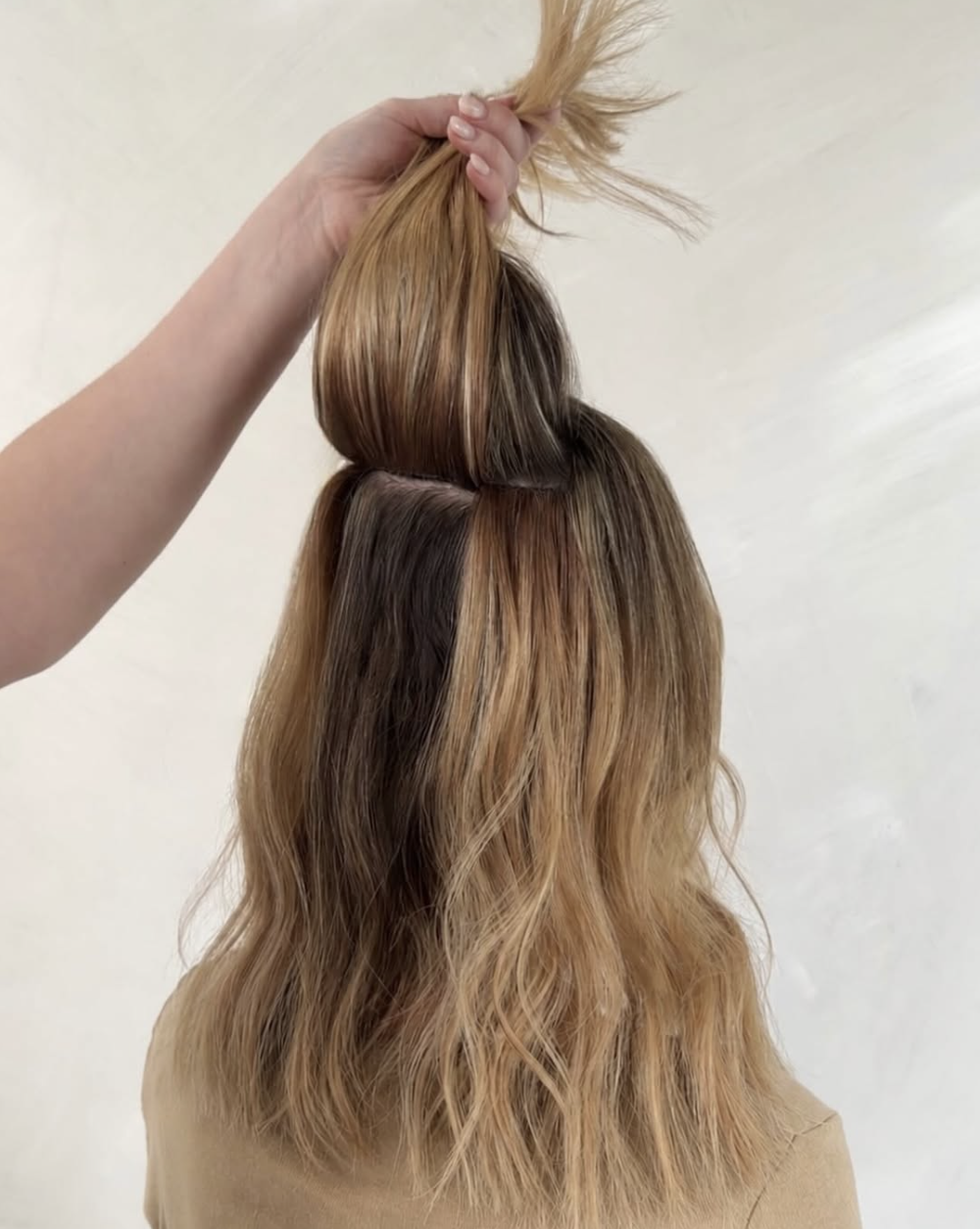
IBE (Invisible Bead Extensions) is a hand-tied weft method. Instead of bonding the extension hair to your natural hair with adhesive, IBE uses small silicone-lined beads that close around a thin section of your hair. The extension weft is then hand-sewn onto a row of beads across the scalp.
No glue. No tape. No heat against the hair shaft at any point in the process.
The weft lies completely flat against the scalp because the beads are flush and the hand-tied weft is designed specifically to conform to the head. This is what makes IBE invisible in ponytails, braids, and updos — the track doesn't create bulk because nothing is bonded, just positioned.
Weight distribution is the other thing that sets IBE apart. Tape-in and k-tip methods concentrate attachment at individual points. IBE distributes weight evenly across an entire row, which is why it's appropriate for fine and thinner hair when other methods aren't. There's no single point of tension.
How to Know Which Method Is Right for You
Here's the honest version:
If your hair is fine or has any thinning: IBE or nothing. The concentrated attachment points of tape-in and k-tip are too much for compromised strands.
If you have thick, dense hair and want individual strand movement with maximum versatility: k-tip is worth considering.
If you want a lower upfront time and cost commitment and your hair is healthy: tape-in is a reasonable entry point.
If you want extensions to last, move naturally, and not damage what you have: IBE.
The reason we consider IBE the standard is that after looking at all the methods, it's the one we'd recommend to someone we care about. We're not offering a menu of options because we don't think all the options are equal. When clients come to us, we want to know we're doing the right thing by their hair.
The best way to know what's actually right for you is a consultation. We look at your hair health, talk through your goals and lifestyle, and tell you honestly whether extensions are the move and which approach fits your situation.
→ Book your free extension consultation at White Brick or text us at (262) 825-1610