
Neurowellness Is the Wellness Story of 2026. We've Been Building Toward It Since Day One
There's a phrase you've probably been hearing everywhere: nervous system regulation.
It's on your feed. It's in the group chat. And it would be easy to file it away as one more wellness word that'll be gone by spring — except this one isn't going anywhere, and it’s worth understanding.
What is neurowellness? Neurowellness is the practice of actively calming and regulating the nervous system — moving the body out of fight-or-flight and into a state where it can actually rest, repair, and feel like itself again. The Global Wellness Summit named "The Rise of Neurowellness" one of its ten defining trends for 2026, and the numbers behind it are sobering: Gallup's 2025 data across 144 countries found that 40% of people report high anxiety on any given day.
Not stressed. Not busy. Dysregulated. Stuck in a physiological state the body was never meant to stay in more than temporarily and somewhat infrequently — which is where the ruined sleep, tight jaw, skin that won't calm down, and hair that's shedding more than it used to may have stemmed from.
Here's what we find most interesting about it: the wellness industry's answer used to be do more. Optimize, track, biohack, push. Neurowellness is the correction. The Summit calls it "bio-harmonization over biohacking" — and after years of being told to grind harder at our own wellbeing, an entire industry has arrived at the conclusion that what people actually need is to be taken care of.
We could have told them that. We've been doing it in a chair for years.
The Part of the Trend Nobody's Talking About Yet
Most of the neurowellness conversation is about things you do or wear — breathwork, cold plunges, vagus nerve devices, headbands that read your brain waves. All of it requires effort, gadgets, or both.
But the Summit points to something further out: the future of nervous system regulation may be environmental. Not a device you use or a practice you perform, but a place that does the work on you — quiet corridors, sound-softened rooms, spaces designed as shared decompression. Regulation built into the architecture, working whether you're thinking about it or not.
We didn't set out to build that. We set out to build somewhere people wanted to stay.
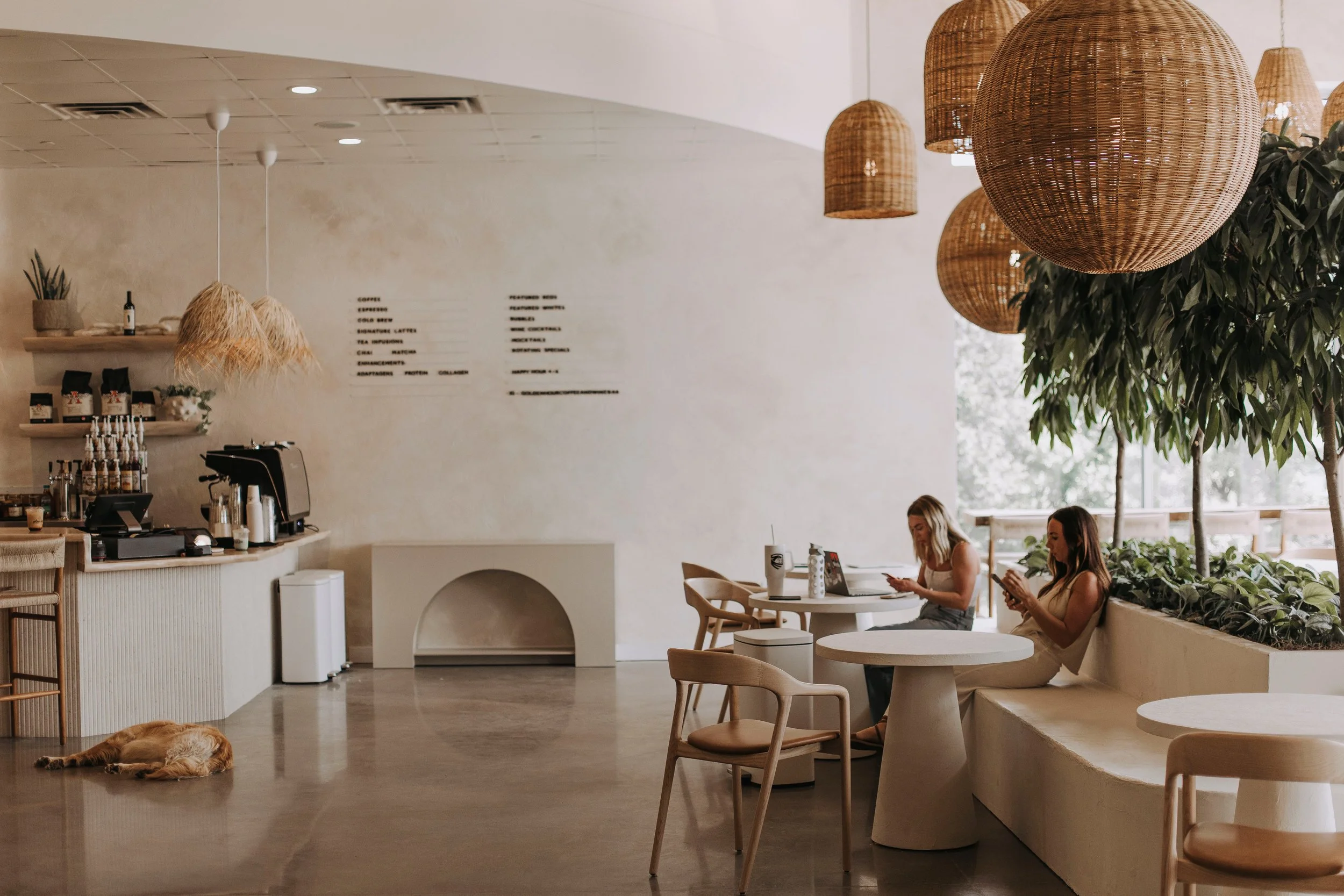
But look at what's actually here: a salon, a spa lounge, and a coffee and wine bar under one roof, in a building where the entire premise is that you arrive, you're taken care of, and you're in no hurry to leave. That's not a menu of services. That's an environment.
How This Building Is Designed to Calm You Down
The Head Spa: the most nervous-system-responsive surface you have
If you were going to design one ritual specifically to shift someone out of fight-or-flight, you would design a head spa.
The scalp is densely wired — threaded with nerve endings that respond to sustained, unhurried touch in a way almost no other part of the body does. Research on scalp massage has measured real physiological shifts: lower stress hormone levels, slower heart rate, lower blood pressure. Not "felt nice." Measured.
But the science isn't why people cry in the chair. That has more to do with the fact that almost no adult gets forty-five uninterrupted minutes of being cared for, with nothing asked of them, ever. Warm water. Hands that aren't in a rush. A room built for stillness rather than efficiency.
Our rituals include therapeutic products and a genuinely restorative scalp treatment, and yes, your hair leaves better than it arrived — healthier scalp, smoother cuticle, product buildup gone. But the thing guests describe on the way out isn't just about their hair — it’s a sense of calm from a body that believes it's safe.
This is what we mean when we say we're not selling a hair treatment.
Explore the head spa rituals →
Golden Hour: the exit ramp
Here's the flaw in almost every spa experience: you spend an hour being carefully unwound, and then you're handed your keys and returned to a parking lot. The nervous system doesn't have a chance to hold onto any of it.
Golden Hour is the difference. Coffee and wine, in the same building, so the ritual doesn't end at the door — it tapers. A tea or latte at a table where no one needs anything from you. A glass of wine before you rejoin your evening. The unhurried twenty minutes between being cared for and going back out there is not an add-on to the experience. Increasingly, we think it might be the most important part.
The Skin + Body Lounge: a quieter room, on purpose
The Lounge exists to make access to skin and body rituals easier.
Jen spent two decades in professional skincare, including years as a national educator. Her rituals are results-driven — real correction, real resurfacing — but they're built the way everything here is built: unhurried, layered, customized to your skin in real time. Skin longevity is won in a calm body. Cortisol is not kind to collagen.
Meet Jen and the Skin Rituals →
And the original one: the chair
Long before anyone used the word neurowellness, there was a woman in a chair with someone else's hands in her hair, telling the truth about her week.
The salon has always been a regulation ritual. Sustained touch. Undivided attention. A safe-space relationship. The head spa didn't introduce this idea to White Brick — it just gave it a room, a menu, and a name.
Where to Start
If you're new to any of this: book The Cleanse, our 30-minute head spa ritual. It's the shortest way to understand what everyone's talking about, and you'll leave with a rough dry and somewhere to be.
If you're running on empty: The Sanctuary. Ninety minutes, a full signature blowout at the end, and no reason to look at your phone.
If you're already coming in for color or extensions: add a head spa ritual before your next install or re-install. Your scalp starts the cycle completely reset, your stylist works on a clean foundation, and you get the hour anyway.
Then stay. Try something at Golden Hour after. The tapering-off is the part most people skip, and it’s just as important.
Head spa rituals are 20% off through September while we perfect every detail.
Neurowellness FAQs
What is neurowellness? Neurowellness is the practice of regulating the nervous system — shifting the body out of a chronic fight-or-flight state and into rest and repair. It spans everything from breathwork and touch therapy to vagus nerve technology. The Global Wellness Summit named it one of the biggest wellness trends of 2026.
Does a head spa actually help with stress? The scalp is one of the most touch-responsive areas of the body, and research on scalp massage has measured reductions in stress hormones along with lowered heart rate and blood pressure. Beyond the research, sustained, unhurried touch in a quiet room is one of the oldest and most reliable ways to signal safety to the body.
How often should I do something like this? For scalp health, every four to six weeks. For nervous system benefit, as often as you'd like — most people find that once they've experienced it, they stop thinking of it as an indulgence and start treating it as maintenance.
I've never had a head spa. What actually happens? You lie back in a dedicated room. There's warm water, therapeutic-grade products, and an extended scalp massage. Actual ritual depends on what you’ve booked. Nothing is asked of you. Every ritual ends with a rough dry, so you leave presentable.
Is this just relaxation, or does it do something for my hair? Both. Product buildup is removed, the scalp is exfoliated and hydrated, and the hair cuticle is treated — which is why hair looks and behaves better afterward. The nervous system part is what brings people back.
Can I do this on a lunch break? The Cleanse is 30 minutes, so yes. Though we'd gently point out that the whole idea is to stop rushing — and there's a coffee bar in the building.
The Skin + Body Lounge is located inside White Brick Salon, 14640 W. Capitol Dr., Brookfield, WI — serving Lake Country, Menomonee Falls, Wauwatosa, and the greater Milwaukee area.